
Universities Deliver a Clear Message: AI Is a Tool, People Must Remain at the Center
Rapid technological advances and new applications in artificial intelligence are becoming more visible across higher education and a wide range of industries, accelerating change. This technology now plays a major role on university agendas, from classrooms and campuses to assessment, evaluation, and academic administration. Yet its fast expansion also raises a fundamental question: as technology moves further to the forefront, how can the human dimension of education be protected?
Recent research and university practices point to a shared answer. Even as artificial intelligence applications become more widespread, people remain at the center of learning. Universities are not simply adopting technology. They are also embracing an approach that measures its impact, analyzes its outcomes, and supports evidence-based decision-making.
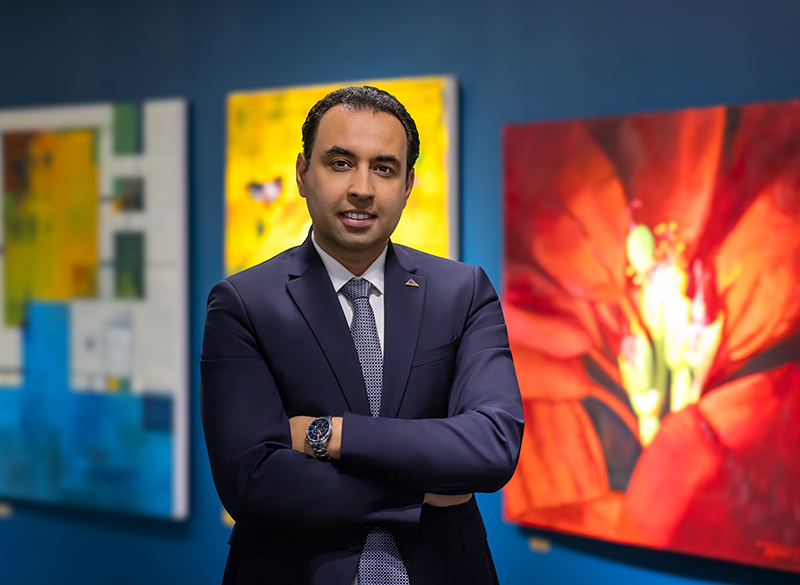
Commenting on the issue, Yeditepe University Vice Rector Prof. Oğuz Bayat says the role of artificial intelligence at universities must be addressed within a scientific framework. In Bayat’s view, artificial intelligence is a powerful tool that supports education and saves significant time, but it should not be treated as an end in itself. “Artificial intelligence can make education more efficient, more inclusive, and more personalized. However, this technology is not an end in itself. What matters is being able to put artificial intelligence in the service of an educational approach that places people at the center and whose impact can be measured.”
Personalized Learning Opportunities Are Expanding
Prof. Dr. Oğuz Bayat states that artificial intelligence is making significant contributions in many areas, from personalizing course content to identifying students’ learning difficulties early. These contributions also include improving the quality of assessment and evaluation processes, enabling more systematic use of learning analytics, and reducing the administrative burden on academics.
It is also noted that AI-powered summarization and adaptation tools are making access to education easier, especially for students with special learning needs and for those with differences in attention, perception, or learning.
The Risks Must Also Be Taken Into Account
The opportunities offered by artificial intelligence are also seen as carrying risks when used without planning or oversight. According to Prof. Dr. Oğuz Bayat, systems trained on biased or unverified data can deepen the challenges already present in education. The effects of rapidly developing technology still cannot be analyzed in a sound way, as systematic measurement and scientific evaluation remain insufficient. Problems related to originality arising from AI-generated content, unsupervised automation, and the weakening of face-to-face interaction necessitate that universities establish a common framework and clearly define ethical principles for the use of these tools.
Research shows that some academics remain cautious about the use of generative artificial intelligence. A significant part of this hesitation stems from the fact that ethical principles for its use have not yet been clearly defined. As education, transparent data sharing, and scientific evaluation processes increase, concerns about artificial intelligence decline, and a healthier basis for its use begins to take shape.
First the Goal, Then the Technology
Pilot practices conducted at universities show that artificial intelligence can enhance the learning experience when used effectively. Prof. Dr. Oğuz Bayat stresses that universities must clarify their educational goals before choosing the technology. Bayat notes that technologies introduced without a plan increase costs and create institutional confusion. He adds that sustainable transformation requires experimental implementation, impact analysis, and a culture of continuous improvement.
What Will Be Expected of Future Graduates?
According to Yeditepe University Vice Rector Prof. Dr. Oğuz Bayat, one of the most important responsibilities of universities goes beyond teaching students how to use technology. They must also teach them when and in what circumstances it should not be used.
Prof. Dr. Bayat says, “The graduates of the future will not be individuals who use artificial intelligence without question. They will be individuals who verify it, analyze data sources, manage it within ethical boundaries, and understand the responsibility behind the decisions they make. Artificial intelligence carries significant transformative potential in higher education. However, the direction of that transformation will be determined not by the technology itself, but by universities’ research culture, educational vision, and human-centered approach.”