Europe’s Universities Unite in Istanbul
A Landmark Gathering Representing 900 European Universities Held in Istanbul
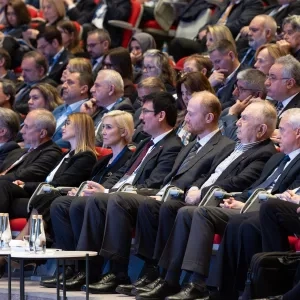
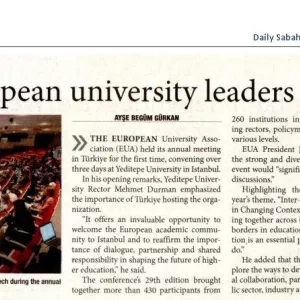
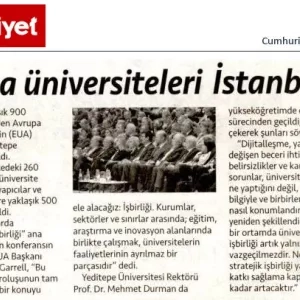
The Annual Conference of the European University Association (EUA)—widely regarded as one of the most influential platforms shaping strategic decisions in higher education and representing nearly 900 universities across Europe—was held in Türkiye for the first time ever.
Hosted by Yeditepe University, the 29th edition of the conference brought together approximately 500 participants in Istanbul, including rectors, university leaders, policymakers and experts from 260 institutions across 41 countries.
Prof. Dr. Garrell: Diversity and Pluralism Are Integral to EUA’s Identity
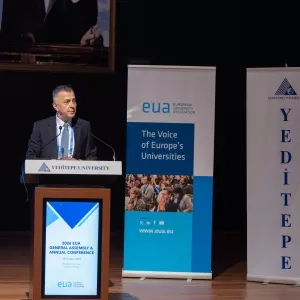
In his opening remarks under the main theme “Collaboration Between Universities in Changing Contexts,” EUA President Prof. Dr. Josep Maria Garrell emphasized the breadth of international participation:
“These diverse perspectives will enrich and guide our discussions over the next two days. Diversity and pluralism are fundamental to the identity of the EUA as an organization.”
“Collaboration Lies at the Heart of Universities”
Highlighting the central theme of the conference, Prof. Dr. Garrell continued:
“This year, we focus on a topic that lies at the very core of universities: collaboration. Working across institutions, sectors and borders—in education, research and innovation—is an integral part of what universities do. Throughout the conference, we will explore partnerships between institutions, collaborations with public authorities, industry and other stakeholders at local, national and international levels. We will also examine the innovative tools and approaches universities use to build and sustain these partnerships.”
Prof. Dr. Durman: Collaboration Is No Longer Optional, It Is Essential
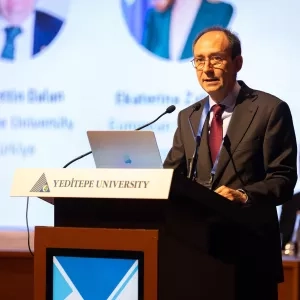
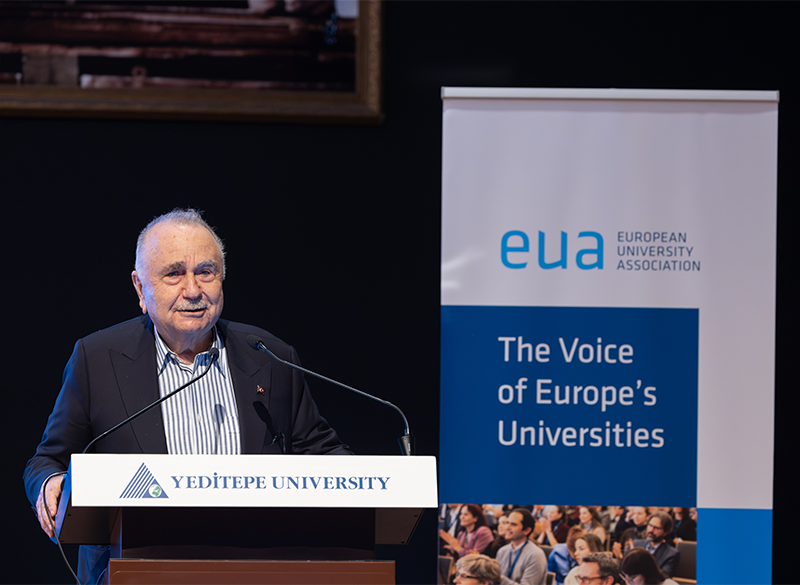
Rector of Yeditepe University, Prof. Dr. Mehmet Durman, underscored the symbolic significance of hosting the conference in Istanbul—a city shaped by over 6,000 years of civilizations, cultures and intellectual traditions:
“Today, universities carry a similar mission: to bring together people, disciplines, institutions and ideas across borders, transforming diversity into a source of strength, creativity and collective progress.”
Addressing the profound transformation in higher education, Prof. Dr. Durman stated:
“Digitalization, artificial intelligence, evolving skill demands, global uncertainties and complex societal challenges are reshaping not only what universities do, but how they position themselves in relation to society, knowledge and one another. In such a context, collaboration between universities is no longer merely beneficial—it is indispensable. The more genuine and strategic our collaborations, the greater our capacity to contribute to society.”
From Education to Digital Transformation: Key Topics on the Agenda
Over two days, the conference addressed a wide range of critical issues extending beyond academia to education policy, the future of young people and national competitiveness. Discussions focused on how European universities will navigate the years ahead, define areas for collective action and adapt to rapidly changing global conditions.
Sessions covered the future of education programs, joint research and innovation initiatives, university–industry collaboration and the evolving expectations of younger generations. The impact of digital transformation on education and research—and how universities can effectively respond—emerged as a central theme.
EU Higher Education Strategy in Focus
The conference also explored new funding mechanisms and support programs introduced by the European Union, alongside broader topics such as public trust. The role of universities in addressing global challenges—including sustainability, climate change and societal transformation—was highlighted as a key priority throughout the discussions.