
Boron Reserves Could Give Türkiye an Edge in Fusion Energy
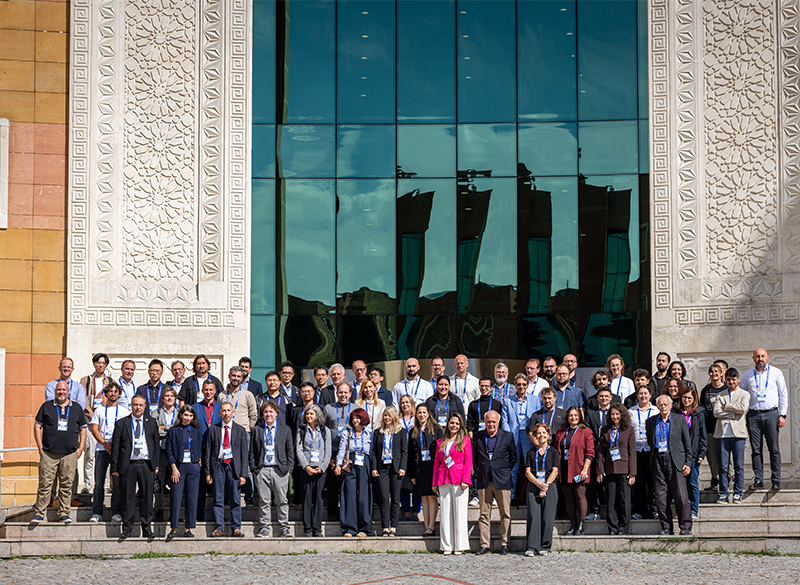
The IWPROBONO International Workshop, jointly organized by Yeditepe University and Bandırma Onyedi Eylül University, brought 85 researchers from 23 countries to Istanbul
The workshop examined the role of proton-boron fusion in clean, sustainable energy production and medical applications.
Türkiye holds approximately 70% of the world’s boron reserves, making proton-boron fusion a strategic field for the country. Proton-boron fusion has attracted attention for its high energy potential, lack of neutron production, and potential for low radioactivity. Research is also continuing on using fusion-produced alpha particles to treat various diseases, particularly cancer. Experts say Türkiye could play an important role in the technology’s future through its boron resources, materials development, and medical applications.
Held at Yeditepe University from 5 to 8 October, the IWPROBONO International Workshop brought together scientists working on proton-boron fusion. Organized as part of the EU-supported COST Action CA21128 PROBONO, the workshop drew 85 researchers from 23 countries. Participants discussed scientific advances, technical challenges, and future applications of proton-boron fusion.
‘Potential for clean and sustainable energy’
Prof. Dr. Bülent Büyük of the Faculty of Engineering and Natural Sciences at Bandırma Onyedi Eylül University, who also directs the university’s Boron Technologies Application and Research Center, said experimental research into proton-boron fusion has increased in recent years alongside advances in laser and magnetic technologies.
Highlighting fusion’s potential to generate large amounts of energy, Büyük said the proton-boron reaction also offers a major advantage in terms of radioactivity because it does not release neutrons. The alpha particles produced in the reaction carry an electric charge, which could enable direct electricity generation, Büyük added. “The world is focused on producing large amounts of clean, sustainable energy. Proton-boron fusion offers significant advantages in this respect,” Büyük said.
‘Türkiye could become a strategic fuel supplier’
Büyük emphasized that Türkiye’s boron reserves offer an important advantage in proton-boron fusion. “One of the main fuels for the reaction is the boron-11 isotope. This is particularly important for our country, which holds 70% of the world’s boron reserves. Once sustainable energy production becomes possible and the current technical challenges are overcome, Türkiye could become one of the world’s most important strategic fuel suppliers,” Büyük said.
Büyük said research in this field requires substantial investment in infrastructure and facilities and emphasized the importance of Türkiye developing a shared strategy involving the private sector, universities, and public institutions.
‘There is also potential in healthcare’
Büyük said proton-boron fusion’s potential extends beyond energy production, noting that the alpha particles generated in the reaction could be used in medical applications. “There is considerable potential to use alpha particles from proton-boron fusion to treat various diseases, particularly cancer.”
Prof. Dr. İpek Karaaslan of Yeditepe University’s Faculty of Engineering and Natural Sciences said Türkiye should be involved in developments in this field given its boron resources. Noting that proton-boron fusion is still at the experimental stage, Karaaslan said Türkiye could play an important role, especially in developing materials containing protons and boron and in medical applications.
‘Important amid energy crises’
Karaaslan described fusion research as technically demanding and said it is becoming increasingly important as global energy demand rises and zero-carbon targets gain prominence. Türkiye’s boron resources could provide a strategic advantage in this field, Karaaslan said. “Given that our country is rich in boron, staying out of this research would be a major missed opportunity.”
‘Our work is ongoing’
Dr. Bing Liu of the China-based ENN Group said the company aims to reach the commercial prototype stage by 2035, adding:
“We believe the reactor, which is a few meters in size at this stage, could readily and safely generate clean energy in a typical neighborhood. Our work on this is ongoing.”