
5G Is Rewriting the Future of Business and the Professions
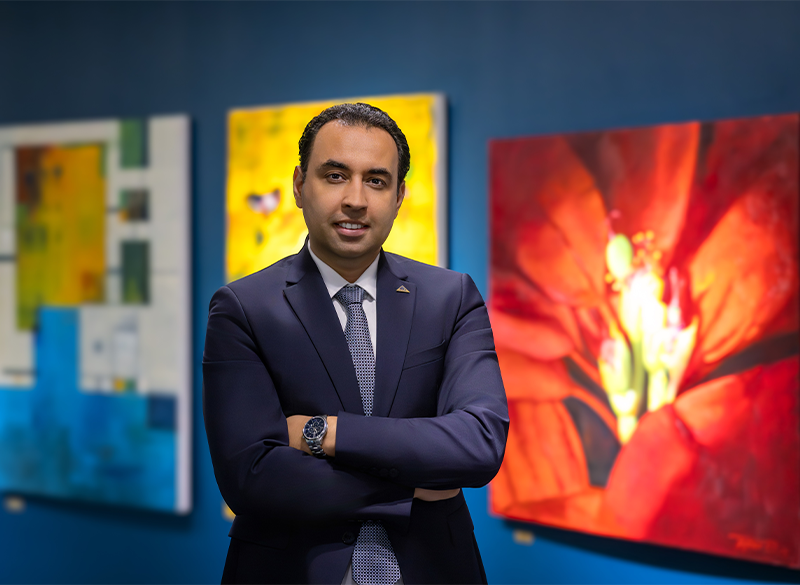
Yeditepe University Vice Rector Prof. Dr. Oğuz Bayat has stated that 5G is far more than a communications infrastructure and will fundamentally transform the structure of business and working life across a wide range of sectors, from manufacturing, logistics, healthcare, and transportation to small and medium-sized enterprises.
5G technology is often discussed primarily as a symbol of faster mobile communications. Prof. Dr. Oğuz Bayat argues that its true transformative power runs considerably deeper.
Through technical capabilities such as ultra-low latency, high device density, and network slicing, 5G is turning communication between machines, systems, and objects into the new backbone of the economic order. The human-centered communication paradigm of the 4.5G era is giving way to real-time, machine-to-machine data exchange.
Global projections indicate that by 2025, billions of users will be connected to 5G networks, and by 2030, approximately 80 percent of mobile data traffic will run on this infrastructure. The picture that emerges points to a single conclusion: 5G is no longer a vision of the future but a new economic system actively being built.
Which Sectors Will Lead the Way?
Manufacturing and industry are among the areas where the transformation will be felt most strongly. With latency reduced to the millisecond range, robotic systems and automation architectures will be able to operate with far greater integration, advancing Industry 4.0 and artificial intelligence applications to a new level.
In transportation, autonomous vehicles and smart traffic systems will be supported by real-time decision-making mechanisms, while cities will evolve into self-optimizing smart environments for energy, security, and infrastructure management. In healthcare, remote intervention and instant data monitoring are opening the door to a new era in critical operations.
The Professions of the Future and Advice for Young People
In the labor market shaped by 5G, AI engineers, network architects, Internet of Things (IoT) specialists, cybersecurity professionals, and robotics and autonomous systems engineers will be in high demand. Prof. Dr. Oğuz Bayat notes that what these professions share is not technical knowledge alone.
"The ability to bring together different disciplines is now just as decisive as specializing in a single field," he observes, advising young people to develop a competency set that goes beyond writing code to encompass an integrated understanding of data, networks, and systems logic.
The Transition for SMEs
For small and medium-sized enterprises, the transition to 5G represents far more than a straightforward technology upgrade. Prof. Dr. Oğuz Bayat notes that with 5G, the competitive landscape is transcending local boundaries and moving into a real-time, data-driven, and genuinely global dimension.
In this new environment, the businesses that will succeed are those capable of collecting and analyzing data and making immediate decisions on that basis. The low latency and high connectivity capacity that 5G provides gives companies the means to make every process smarter, from production and logistics to customer experience and operations management.
Yeditepe University Vice Rector Prof. Dr. Oğuz Bayat identifies three critical priorities for SMEs seeking to keep pace with this transformation: digitizing their processes, integrating real-time data flows into their business models, and strengthening their cybersecurity infrastructure..