
Pathways to the Future: University–Industry Collaboration
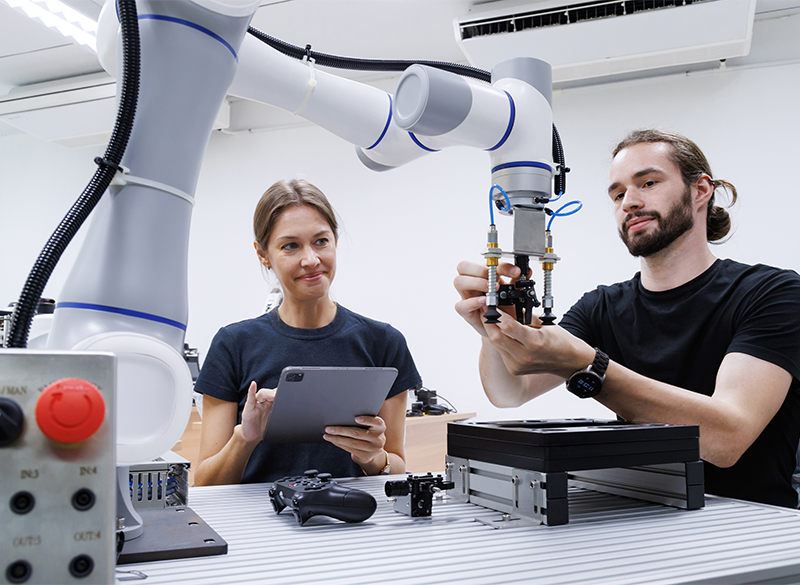
As the announcement of university entrance exam results approaches, many young people are not only thinking about which program to choose, but also what kind of career opportunities that program may offer after graduation. At this stage, one of the most important considerations is university–industry collaboration. In today’s world, one of the key elements that adds value to a diploma is the university’s ability to connect academic learning with the professional world.
What Does University–Industry Collaboration Really Mean?
It means aligning academic knowledge, research, and student potential with the needs of the business world. A student gains hands-on experience by applying what they’ve learned in the classroom within real-world settings—such as a production line, an R&D laboratory, a clinical trial, or a technology development center. In this way, they graduate with a clear understanding of what to expect before entering the workforce.
Yeditepe University Vice Rector Prof. Dr. Ece Ceylan Baba explains the importance of this connection as follows:
““What the business world expects from young people today goes beyond knowledge — it’s about the ability to apply that knowledge in real-life situations. Universities must serve as a bridge between students and real-world experiences — the professional environment and the international stage alike.This connection helps young people step into the future fully prepared.”.”
Examples of University–Industry Collaboration
· Engineering Faculty students engage in prototype design, field testing, and real-time project management across a wide range of sectors—from automotive and defense to artificial intelligence and energy technologies. Several departments also carry out advanced R&D projects in fields such as robotics, autonomous vehicle systems, and sustainable energy solutions.
· Architecture and Interior Architecture departments collaborate with design studios and construction firms to involve students directly in urban planning, green building practices, and restoration projects. This enables students to gain hands-on experience with every phase of a project—from design drafting to on-site implementation.
· Genetics and Bioengineering students participate in laboratory-based research with biotechnology and pharmaceutical companies in critical areas such as vaccine development, drug discovery, and gene therapy. In some projects, they work alongside company teams applying advanced techniques like cell engineering, DNA sequencing, and biological data analysis.
· Dentistry, Pharmacy, and Health Sciences faculties partner with international medical device manufacturers, hospitals, and pharmaceutical companies to carry out clinical research. Students take active roles in product development, clinical testing, and patient safety processes. In certain programs, they contribute to developing new treatment protocols at R&D centers.
· Law, Business, Economics and Administrative Sciences, and Communication students collaborate with law firms, media agencies, financial institutions, and international consultancy companies. They conduct research on real legal cases, create media plans, prepare marketing reports, and contribute to financial analyses and market research.
· Creative disciplines such as Visual Communication Design and Industrial Design work with brands on product development, packaging design, and user experience (UX) projects, helping students build their portfolios and improve their presentation skills.
· Food Engineering and Nutrition students take part in collaborative projects with food production companies focusing on quality control, product innovation, hygiene, and sustainable production. Through direct engagement in production facilities, they gain field experience in sampling, laboratory analysis, and R&D processes.
Prof. Dr. Ece Ceylan Baba points to the importance of this diversity:
“These collaborations, which vary from one faculty to another, give our students the opportunity to develop not just within a single field, but across disciplines and industry sectors. Our graduates leave not only with a diploma, but with hands-on project experience, practical knowledge, and strong professional networks. That’s why, during the preference period, it’s just as important for students to look at the academic programs as it is to explore the connections those programs have with the professional world.”
Support for Young Entrepreneurs
Another key aspect of university–industry collaboration is entrepreneurship. Prof. Dr. Baba explains:“We want young people to be capable of launching their own ventures. When universities and industry join forces, great ideas don’t just remain ideas — they become reality. With the support of university incubators, students can turn their concepts into real projects and connect with potential investors.”
Beyond Internships
University–industry collaboration today goes far beyond traditional internships. Thousands of students are engaged in real projects — on production lines, in prototype development, clinical trials, or consultancy cases. Industry professionals provide mentorship, project reports are prepared, and real-world challenges are addressed in the field. As a result, when a student applies for a job, they don’t just present a diploma — they bring real experience. Prof. Dr. Baba notes:“Young people should walk into job interviews not by asking ‘What do I know?’ but rather, ‘What have I done?’ A university that makes this possible gives real value to its diploma.”
Everyone Benefits: Industry, Youth, and the Country
University–industry collaboration offers value beyond the classroom. It brings fresh talent, new ideas, and energy to the business world. Through these partnerships, industry gains direct access to academic knowledge, project support, and innovative young minds. At a broader level, such cooperation contributes to the country’s R&D capacity, accelerates technological advancement, and enhances national competitiveness.
University–Industry Collaboration in Numbers
Universities strengthen out-of-classroom learning by signing cooperation protocols with national and international companies, organized industrial zones, technoparks, R&D centers, and sectoral associations.
Prof. Dr. Ece Ceylan Baba shares some current data:
· Each year, more than 2,500 students at our university take part in joint projects not just in classrooms, but also in production facilities, laboratories, and corporate offices.
· Over 50 companies currently collaborate with our university through protocols covering internships, hands-on training, applied projects, and fieldwork.
· In the past three years, nearly 50 student-led initiatives have moved from idea to product within university incubators and secured investment to establish their own companies.
· In many faculties, students work alongside industry leaders in joint R&D efforts in areas such as prototype development, clinical studies, AI applications, energy efficiency, and design.
· In fields such as law, business, and communication, students collaborate directly with consultancy firms, law offices, and media organizations on real case files, field reports, and client projects..
Prof. Dr. Ece Ceylan Baba summarizes the picture as follows: “What truly makes a difference for our young people is not just learning theory, but being able to apply that knowledge in real professional settings.University–industry collaboration plays a vital role in helping students build the skills and confidence they need for the future.”
Industry Collaboration: A Key to the Future
Choosing a university today means more than selecting a program — it’s about shaping a future. Students and families should explore which laboratories, industrial partners, and professional networks a university is connected to. Prof. Dr. Ece Ceylan Baba concludes with the following remark: “A diploma gains true value when it is combined with knowledge, practical experience, and strong industry connections.University–industry collaboration is a key that can unlock new opportunities for the future of our youth.”
Press: DHA | AA | Internethaber | Milat | Son Dakika