
A New Generation Entrepreneurship Model from Idea to Market
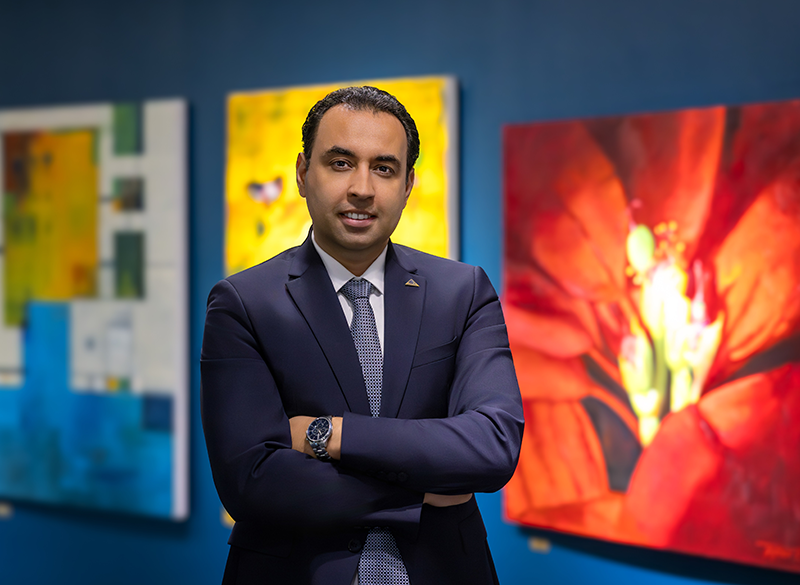
Prof. Oğuz Bayat, Vice Rector for Research, Development and Innovation at Yeditepe University, stated that the university attaches great importance to ensuring that knowledge produced within academia does not remain confined to academic boundaries, but instead transforms into value that resonates in real life and benefits people and society.
“With this understanding, we have established a fully designed structure that spans from the emergence of an idea to its transformation into a product, its incorporation as a company, securing investment, and expansion into international markets. By bringing academic knowledge together with an entrepreneurial culture, we aim to convert knowledge into lasting and tangible benefits,” he said. Prof. Bayat described the new generation technology and entrepreneurship model established at Yeditepe University as follows:
A Holistic Structure Operating in Two Complementary Areas
The system comprises two distinct physical environments that interact continuously and complement each other: on-campus workspaces and the Technology Hub at Teknopark Istanbul.
While the on-campus units focus on idea generation and pre-incubation, the centers at Teknopark Istanbul cover commercialization, research and development, and scaling. A natural, sustainable transition mechanism has been established between the two areas.
The Process Starting from Ideas on Campus: IdeaLab
Representing the first stage on campus, IdeaLab serves as a pre-incubation lab. Located at the campus entrance, this space brings together students, academics, and external entrepreneurs to collaborate. Ideas that have not yet been transformed into companies but show potential are developed here. The goal at IdeaLab is to clarify ideas, form teams, and develop initial prototypes and business models, while the incorporation phase begins in the next stage.
Research, Commercialization, and Scaling at the Technology Hub
Once ideas mature, projects are transferred to the Technology Hub at Teknopark Istanbul for continued development. Three centers on the same floor form an integrated structure that supports both the research and commercialization aspects of this process.
“AI for Industry” Research Center
The AI for Industry Research Center operates in partnership with Fraunhofer Germany and conducts artificial intelligence-focused studies for industry. Through projects developed in collaboration between academia and industry, international partnerships are established and corporate R&D activities are carried out. The center's opening will take place in March, with international partners and high-level guests in attendance.
Venture Studio: A Venture Building Model
The Venture Studio within the Technology Hub is structured according to the venture-building center approach, which is increasingly adopted worldwide and differs from traditional incubation models. Under the Venture Studio framework, students, academics, industry representatives, and investors come together within the same structure. Ideas are transformed into companies, products are commercialized, and prepared for entry into international markets. This structure is open not only to internal partners but also to external partners. At the end of a typical 12-month process, companies graduate from the program and remain under close monitoring.
Sustainability-Focused Activities: Decarbonization Center
The third unit within the Technology Hub, the Decarbonization Center, conducts project-based activities and operates under a TÜBİTAK project supported by the Istanbul Development Agency (İSTKA). The center aims to develop sustainable solutions across carbon footprint reduction, energy, and industrial transformation.
350 Active Projects and Tangible Outcomes
Within this structure, approximately 350 active projects are underway simultaneously. These projects include studies developed by students and academics as well as collaborations with external partners, and are supported by TÜBİTAK, the European Union, the private sector, and international funding sources. What often begins with small-scale funding evolves over time into larger investments and commercialization stages. The process is not limited to potential creation; it delivers tangible outcomes through achievements at Teknofest and international competitions, as well as startups showcased and funded at national and international technology fairs such as Take Off.
National Impact through the TÜBİTAK BİGG Program
One of the key components of the ecosystem is the TÜBİTAK BİGG Program. Within the framework of the program conducted by a consortium that includes Yeditepe University, entrepreneurship projects from across Türkiye are evaluated. Projects deemed suitable receive funding between 1 and 1.5 million Turkish lira, and funded startups can continue their activities on campus, at Teknopark Istanbul, or within the Venture Studio.
Long-Term Goal: Sustainable and International Impact
As Yeditepe University, our vision is for the knowledge produced within the university to meet entrepreneurship, technology, and industry, creating a lasting and transformative impact that transcends borders. This approach, which brings together the potential of young people, academics, and entrepreneurs around a shared future objective, continues to advance as a sustainable model that shapes Türkiye’s technology journey, gains strength at the national level, and is recognized internationally.